

Authentication
Two authentications. One certificate. Zero guessing.
We buy only from vetted partners who authenticate their own inventory — and then we authenticate every piece again ourselves before it ever reaches a customer.
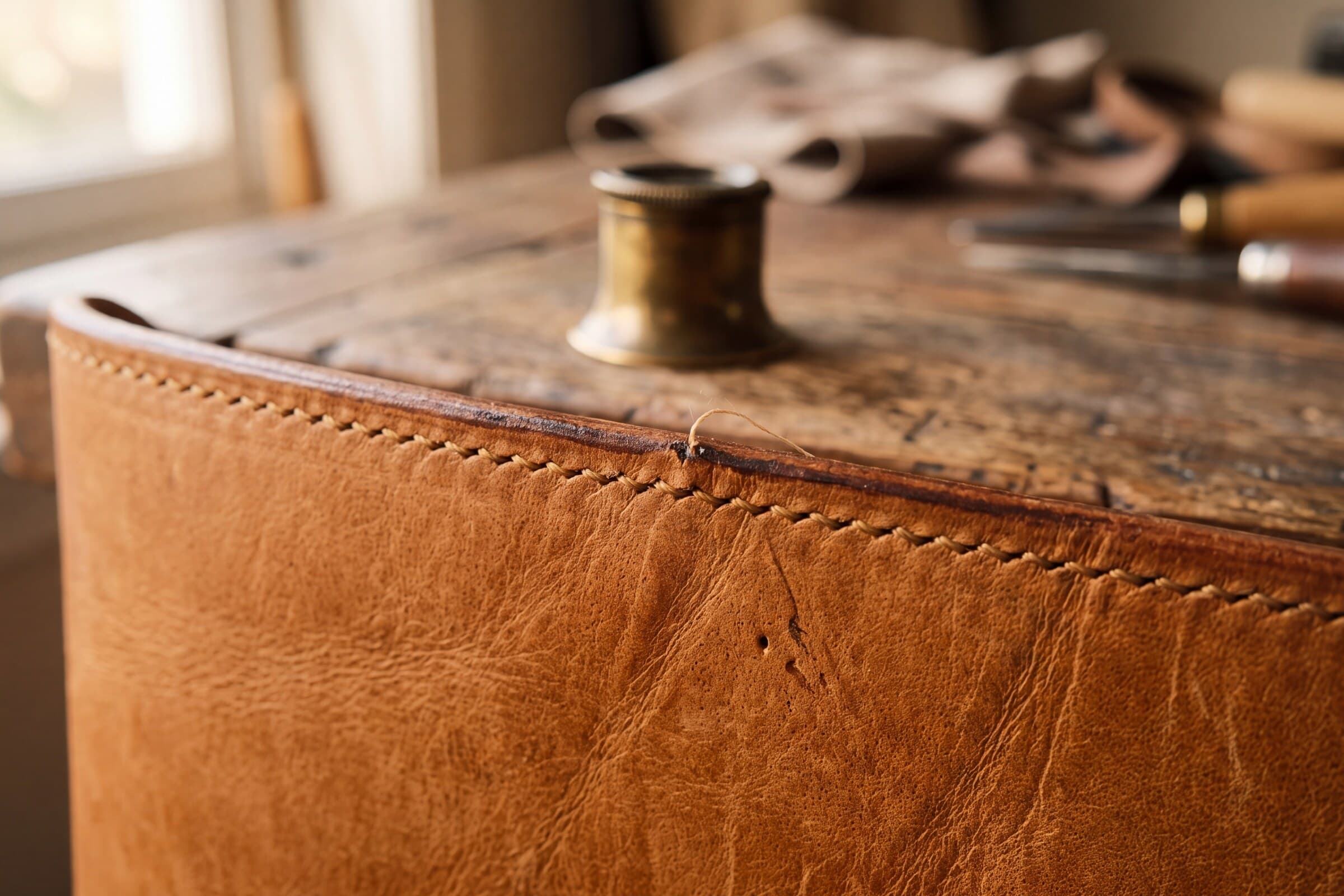
The closed loop
How a piece earns its way to you.
Most resale is an open loop.
Inventory arrives from unknown provenance, gets one round of checking, and the buyer absorbs the risk when something slips through.
Ours is closed.
Authentication happens once inside the network we buy from, before we ever commit — and again on arrival, independently, before anything is graded, photographed, or listed.
Two passes, two different systems.
A fake has to survive both, with two different sets of incentives. That's a materially different risk profile from a single-check marketplace.
Buying inside a closed loop is how we get the deals. Authenticating twice is how we pass them on without passing on the risk.
Pass one
Their pass — before a piece is ever ours.
We buy inside a closed network of vetted partners — sellers who authenticate their own inventory and stake the relationship on it. Their authenticators sign off before we commit to a piece.
We never name who we buy from. But every partner is held to the same bar: no pass, no purchase.
Pass two
Our pass — on arrival, independent of the first.
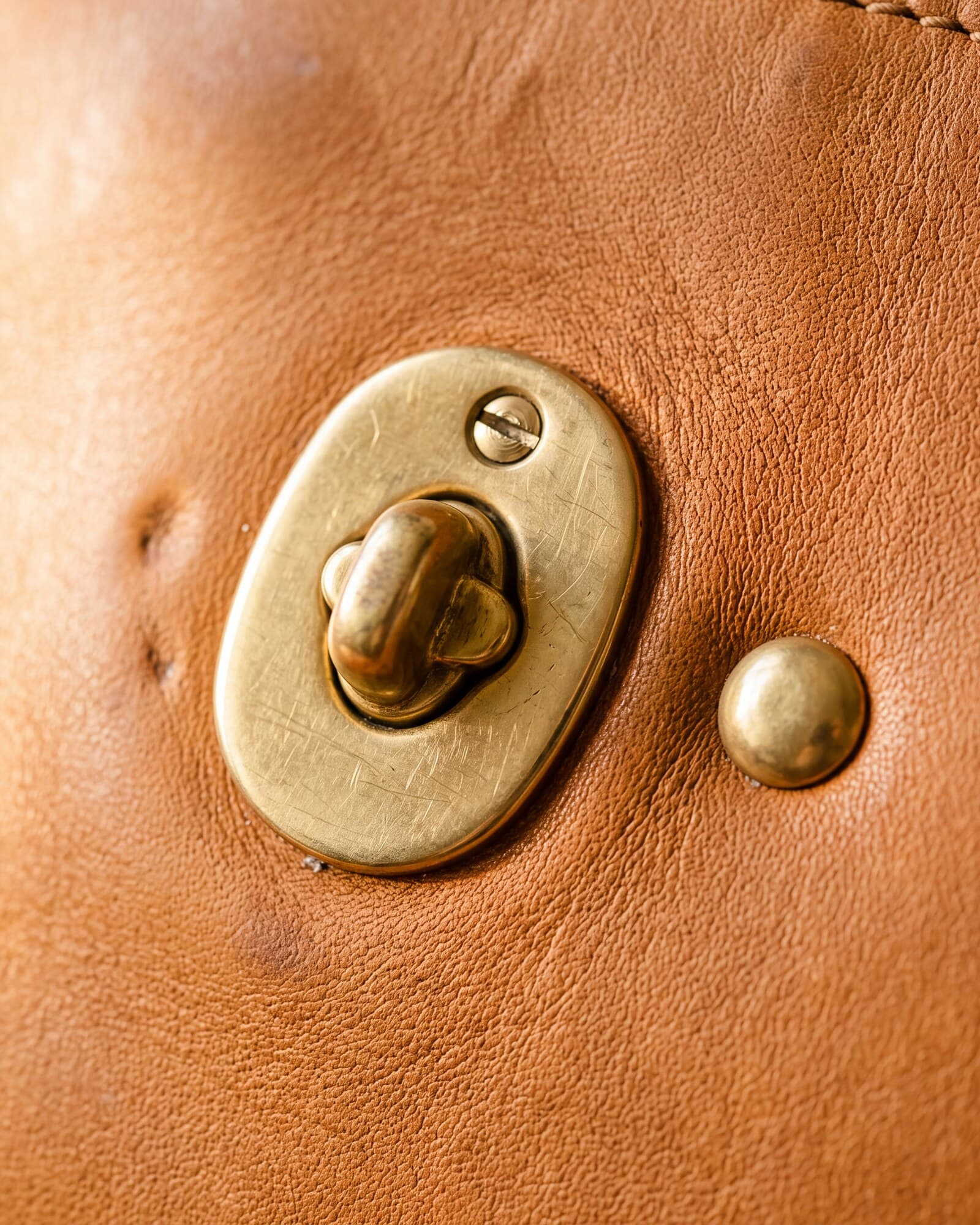
When a piece reaches us, we authenticate it again ourselves. Construction, stitching, hardware, stamps, materials — checked against what the house that made it actually does. Only then is it graded, photographed, and listed.
The second pass is deliberately blind to the first. Nobody here is told what the partner concluded before making their own call, because a second opinion that has already read the first one isn’t a second opinion.
The specialist path
Fine jewelry and watches go a different way.
Leather and hardware are one discipline. Stones, metals and movements are another, and pretending otherwise is how mistakes get made.
So fine jewelry and watches take a specialist path on the second pass — a specialist’s eyes, and an appraiser’s standards where the piece calls for it. Both passes still happen. The second one is simply carried out by somebody who does only this.
It’s slower. That’s the point of it.
The certificate
One piece. One record. In writing.
Every piece ships with its certificate — both passes, the piece, and the date, recorded in one document. Here is what it says.
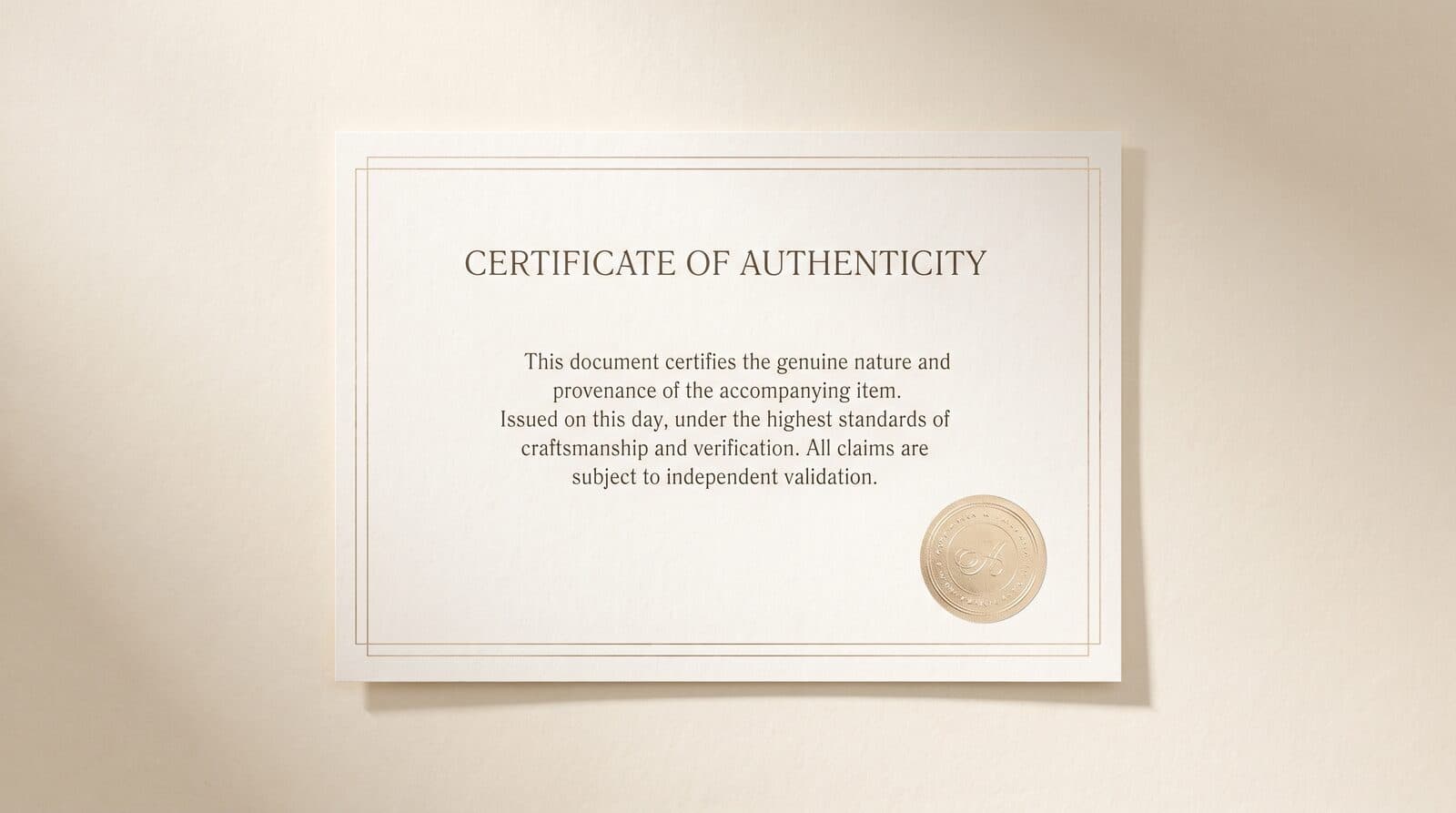
- Certificate number
- Unique to the piece. Quote it to us any time and we'll confirm the record.
- Pass one
- Signed off inside the vetted network we bought from — before we ever committed.
- Pass two
- Run by us on arrival, independent of the first.
- The piece
- Named and described, so the certificate can never drift to another item.
- The date
- The day it cleared the second pass and earned its listing.
Looking yours up
Your certificate has a number. Use it.
Every certificate carries a number unique to that piece. Email it to us and we'll confirm what we hold on record for it — the grade, the flaws we logged, and the date both authentication passes cleared. It works whether you bought the piece from us or from someone who bought it from us first.
Send the number to
hello@meuvement.comA certificate that can't be checked is a printed claim. Ours is checkable, and it stays with the piece.
The rubric
“Excellent” means the same thing every time.
Every piece is graded against this rubric before it’s listed — published in full, so anyone can hold us to it.
| Grade | What it means |
|---|---|
| Pristine | Unworn or indistinguishable from unworn. No visible flaws under studio light. |
| Excellent | Light, careful use. Faint surface wear you have to look for. Nothing structural. |
| Very Good | Honest wear — light corner rub, faint interior marks — photographed and listed on the piece. |
| Good | Visible wear that has settled into character. Every flaw shown from every angle. |
| Loved | A piece with a past. Priced for it, photographed without mercy, described without excuses. |
The photography standard
Every flaw shown before you buy.
Photographed from every angle — the corners, the interior, the hardware, and whatever is wrong with it. We’d rather lose the sale than have you open the box disappointed. This is what that looks like in practice.
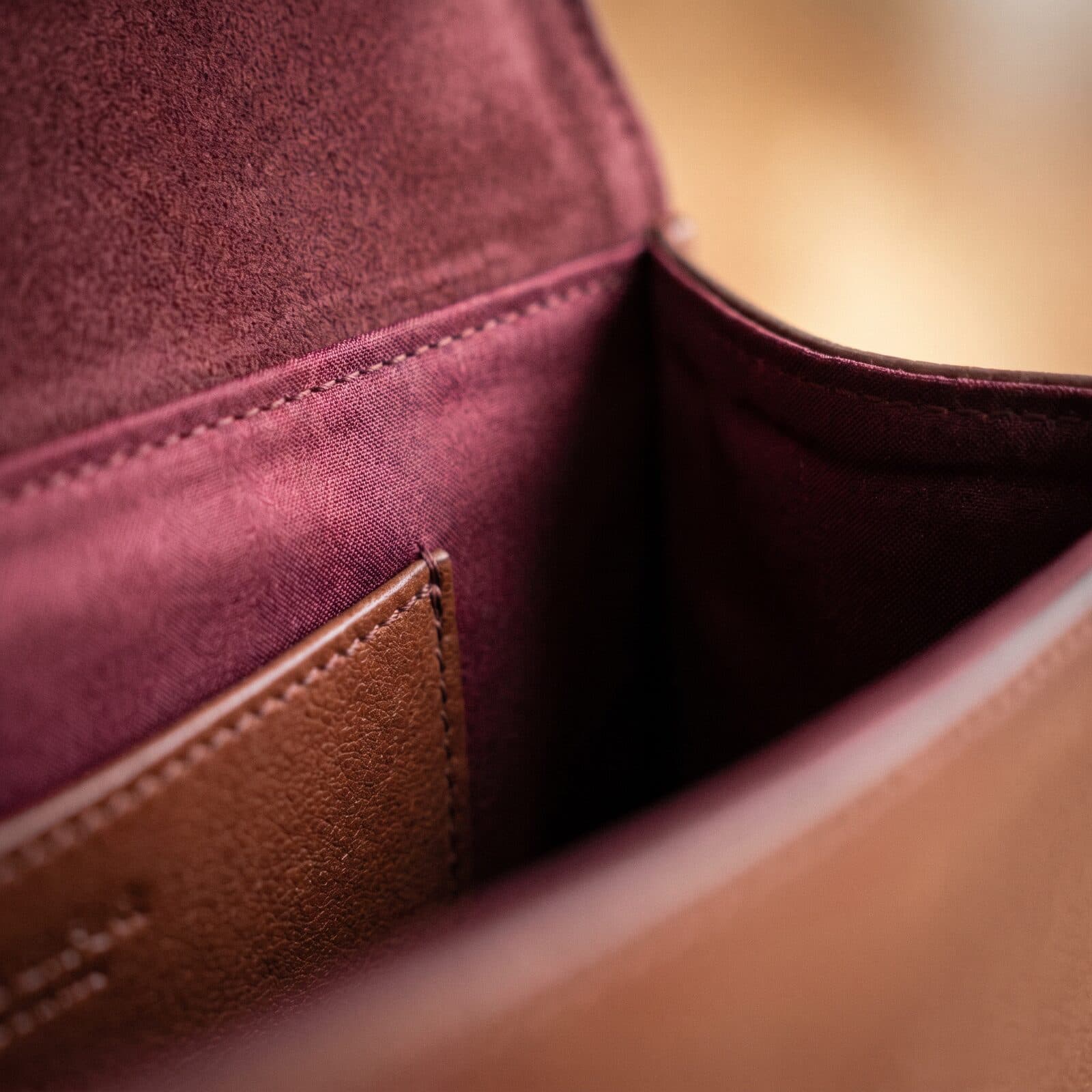
Corner wear
Shown before you buy. Photographed straight on — never styled away.
Hardware
Shot under raking light, so a scratch has nowhere to hide.
The surface
Patina, marks, pen lines — the interior gets the same lens as the outside.
Press a marker to read the note. Every note also appears on the listing.
Questions
What people ask about this.
If yours isn’t here, write to us — a person reads that inbox.
If we're ever wrong
A process, a certificate, and a remedy.
We don't say guaranteed. We say authenticated twice, and we publish what happens if that isn't enough.
If a piece fails our second pass, it goes back to its source before it ever ships. If it shipped and it shouldn't have, you get a full refund.
No form to hunt for, no restocking clause. Write to us and it’s handled.
The Luxury Movement is an independent reseller of authenticated pre-owned luxury goods. We are not affiliated with, sponsored by, or endorsed by any of the brands featured. All trademarks are the property of their respective owners.